Understanding Square Planters
Square planters have emerged as a staple in both residential and commercial landscaping, offering a modern aesthetic that complements various design styles. Their geometric shape provides a clean, structured look that can enhance any outdoor environment, whether it is a garden, patio, or balcony. Additionally, the versatility of square planters allows for easy integration into diverse plant arrangements and landscape designs. When exploring options, square planters offer a variety of styles, colors, and materials to meet the specific needs of your space.
What are Square Planters?
Square planters are containers with equal-length sides, typically used for growing a variety of plants, from flowers to small trees. Unlike traditional round pots, square planters provide a more angular aesthetic that can enhance the overall design of any space. They come in various sizes and materials, allowing for customization to suit individual preferences and landscaping needs.
Benefits of Choosing Square Planters
- Space Efficiency: Square planters fit snugly against walls and corners, making them ideal for small spaces.
- Versatility: These planters can accommodate a wide range of plants, allowing for diverse planting schemes.
- Modern Aesthetic: Their geometric design adds a contemporary touch to any environment.
- Stability: The wide base of square planters offers good stability for taller plants.
- Creative Arrangements: They can be easily arranged in different formations to create visually appealing layouts.
Common Materials Used for Square Planters
Square planters are available in various materials, each offering distinct advantages. Some of the most common materials include:
- Wood: Provides a natural look but requires regular maintenance to prevent decay.
- Plastic: Lightweight and durable, but can fade or become brittle over time.
- Fiberglass: Offers a modern appearance, is lightweight, and resistant to weather damage.
- Metal: A stylish choice that can add a contemporary feel but may require insulation to protect roots from heat.
- Cement/Concrete: Extremely durable and heavy, suitable for larger plants, but can be difficult to move.
Choosing the Right Size
Choosing the right size for your square planters is crucial for the health of your plants and the aesthetics of your space. The right planter can not only affect growth but also how well the planter integrates into your landscape design.
How to Measure Your Space for Square Planters
Begin by assessing the area where you intend to place the planters. Consider the dimensions of the space, including height restrictions and proximity to sunlight. You should also measure the existing plants or desired combinations to ensure compatibility with the planter size. Adequate space for root growth is essential to the health of your plants.
Popular Sizes for Indoor and Outdoor Use
Square planters come in various sizes, from small 10-inch pots suitable for herbs and smaller plants to larger 24x24-inch planters that can accommodate extensive root systems of decorative trees. Popular sizes include:
- Small (10-12 inches): Ideal for herbs, succulents, and small flowers.
- Medium (12-18 inches): Works well for vegetables and mid-sized flowering plants.
- Large (18-24 inches and above): Suitable for larger flowers and small trees.
Understanding Plant Size and Growth Requirements
Ultimately, the size of your square planter should align with the anticipated growth of the plant. Consult with plant professionals to understand the mature size and root depth required for your chosen plants. Larger planters allow for more soil, which helps retain moisture and provides nutrition for thriving growth.
Designing with Square Planters
When incorporating square planters into your landscape design, creativity plays a key role. These planters can be utilized in various arrangements to create unique visual experiences.
Creative Arrangements for Front Yards
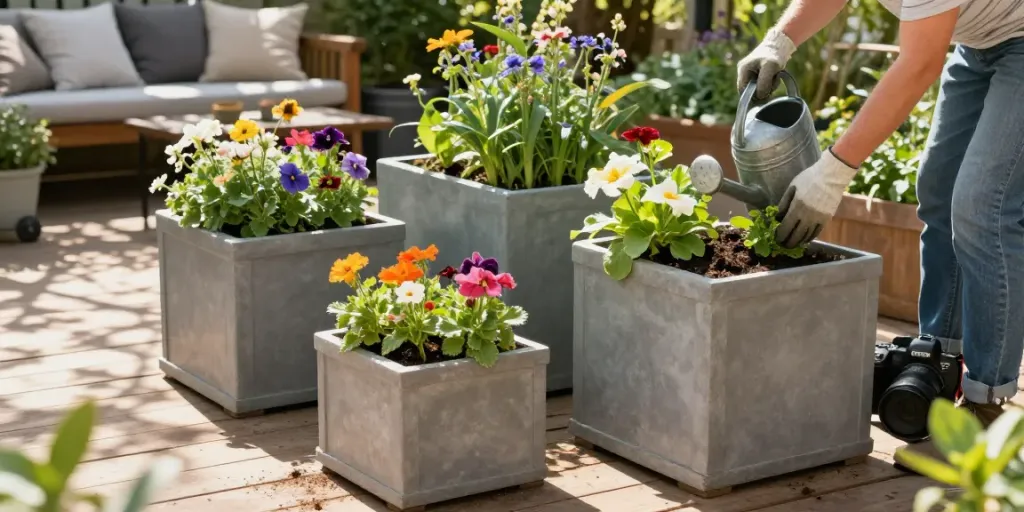
Square planters can serve as focal points in your front yard. Consider grouping multiple planters at varying heights to create depth. Use larger planters as a backdrop with smaller ones in the foreground for a tiered effect. Incorporating diverse plants can enhance the visual appeal and seasonal interest.
Incorporating Square Planters in Small Spaces
For urban dwellers or those with limited outdoor spaces, square planters can provide a green touch without overwhelming the area. Utilize vertical gardening techniques, such as stacking smaller planters or using wall-mounted square planters, to maximize space.
Color Schemes and Plant Combinations for Visual Appeal
Choosing the right color scheme and plant combinations can elevate the aesthetics of your square planters. Consider pairing bright flowers with contrasting foliage for vivid displays. Seasonal changes can also be embraced by rotating plant species, ensuring your arrangement remains fresh throughout the year.
Maintenance Tips for Square Planters
Maintaining your square planters is vital for longevity and plant health. Regular care ensures plants grow optimally and the containers retain their appeal.
Watering and Soil Testing Best Practices
Establish a consistent watering routine based on the plant’s needs and the planter’s material. For instance, wooden planters may require more frequent watering due to their high evaporation rates. Additionally, test the soil for pH and nutrient levels periodically to keep the plants healthy.
How to Prevent Drainage Issues
Drainage is critical to prevent waterlogging, which can be detrimental to plant roots. Ensure that your square planters have adequate drainage holes and add a layer of gravel or stones at the bottom before adding soil. This will facilitate proper drainage while allowing roots to breathe.
Seasonal Care and Plant Rotation Strategies
Seasonal care strategies help your plants thrive year-round. Rotate plant species based on seasonality—opt for cool-weather plants in fall and winter while transitioning to vibrant annuals in spring and summer. Removing spent plants and preparing the soil for new growth is essential for optimal production.
Future Trends in Gardening with Square Planters
The gardening sector is constantly evolving, and several trends will shape how square planters are utilized in the coming years.
Innovations in Eco-Friendly Materials
As sustainability becomes increasingly important, eco-friendly materials for square planters will gain popularity. Biodegradable and recycled materials offer plant lovers a chance to garden responsibly while maintaining aesthetic appeal.
Smart Technology Integration for Plant Care
With advances in technology, smart planters with integrated sensors will provide real-time monitoring of soil moisture, temperature, and sunlight. These innovations will allow gardeners to optimize care and enhance plant health significantly.
Emerging Plant Varieties for Square Planters in 2026
The demand for unique and exotic plants is on the rise. As we look to 2026, expect to see more varieties of edible plants, pollinator-friendly flowers, and dwarf trees being used in square planters, catering to both environmental needs and aesthetic desires.
Are square pots better than round pots?
Square pots offer more efficient use of space compared to round pots. Their corners allow them to fit snugly against walls or other planters, maximizing planting areas. Additionally, square pots often provide better stability for taller plants, as they have a broader base.
What plants look good in square pots?
Many plants thrive in square pots, including herbs, succulents, annuals, and small trees. Vivid flowers, such as petunias and geraniums, along with leafy greens, can create visually striking arrangements.
How to choose the right size square planter?
Consider the mature size of the plant and its root depth when selecting a planter. Additionally, assess the space where the planter will be placed to ensure it fits well without overwhelming the area.
Where can I buy square planters?
Square planters can be purchased from various retailers, including garden centers, home improvement stores, and online marketplaces. For a wide selection, check the offerings at specialized websites.
What materials are best for outdoor square planters?
For outdoor use, materials like fiberglass, metal, and treated wood are great options, offering durability against weather elements. Ensure proper drainage and maintenance for longevity.