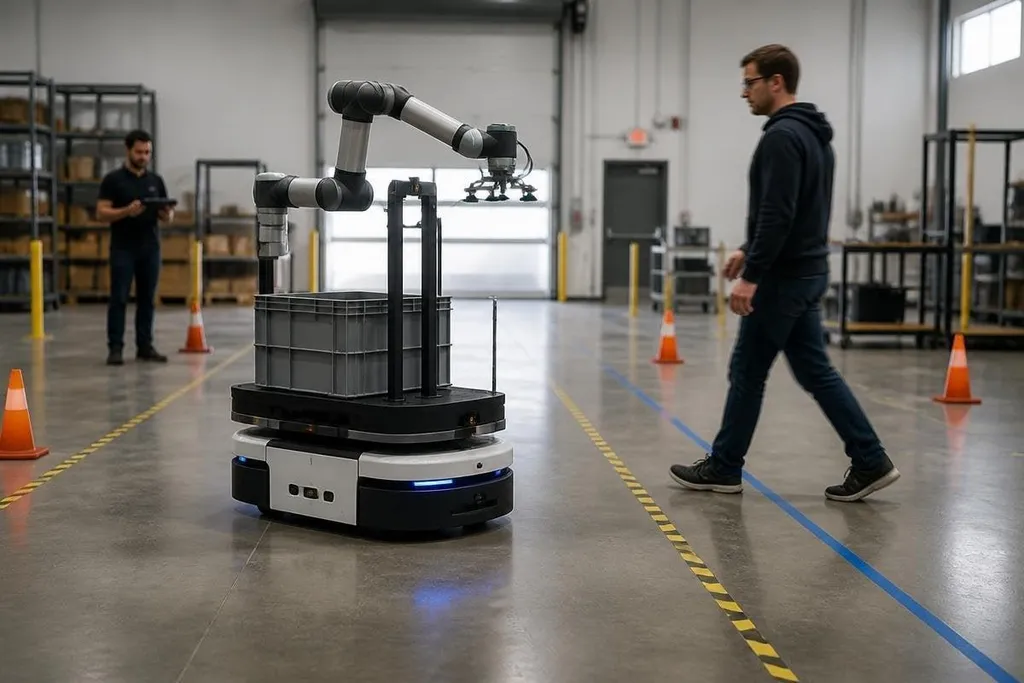
A robot can complete one task on a clean test floor and still fail in the place where you plan to use it. Testing checks what happens when the load changes, a sensor loses data, or a person enters the robot’s path.
Quick read:
- Test the full task, not one successful movement.
- Repeat failures until you can explain the cause.
- Record limits before the robot reaches customer work.
A demo is only one run
A demo proves that a robot completed a task under set conditions. It doesn’t tell you how often the task works, what happens after a failed grasp, or how the robot behaves when the floor, lighting, or load changes.
That gap matters for an automation manager choosing equipment. Equipment that needs a clean surface and fixed object positions may work in a lab, then stop when cartons arrive at a different angle. Testing brings those conditions into the plan before they affect production.
Repeat runs matter for the same reason. One successful pick says little about a system that must repeat the pick for hours. Record each attempt, including pauses, safety stops, dropped objects, manual resets, and operator help.
Test the whole system
Robot testing covers more than the arm, wheels, gripper, or software viewed on its own. The robot depends on sensors, network links, batteries, chargers, safety controls, fixtures, and the people around it.
A warehouse robot may navigate well until a network delay leaves its map out of date.
A mobile manipulator may reach the target until its gripper meets a box with a different surface. The test should follow the complete task through its handoff to a person or another machine.
This is also where failure recovery gets checked. After a missed pick, can the robot stop safely, report the fault, and return to work without a technician changing code? If the answer is no, the task still depends on hidden manual work.
A lab safety result answers a different question from a robot working near people. Robot24.com safety reporting can place each claim beside the named machine, test setting, and deployment, so the next section can check the safeguards themselves.
Safety needs its own tests
When a person crosses its path, a guard opens, or someone presses the emergency stop, the robot must respond correctly.
Plan those cases.
Don’t leave them for installation day. Test normal stops, fault stops, restart behavior, and access to the emergency stop. Power recovery matters too. After power returns, check that work cannot resume while someone remains inside the work area.
Write down the result, the setup, and the person who ran the test. A record lets the next technician repeat the check and tells the site what changed after a software update, tool swap, or layout change.
What the results should tell you
Good test results explain the robot’s limits in terms the site can use. They should answer how much weight the robot can handle, which objects cause failures, how often a person must step in, and what conditions stop the task.
The record should separate a software fault from a blocked sensor or a worn tool. That detail points to the right fix and prevents a team from blaming the whole robot for one weak part.
I’d treat any robot without repeatable failure records as unfinished, even if its demo looks clean.
A test plan you can use
Use this checklist before the robot moves into regular work:
- Define the task start and finish, including handoffs.
- List the loads, object shapes, surfaces, floor types, and lighting the robot will meet.
- Repeat the task after planned faults, stops, and sensor or network loss.
- Record each manual intervention and the reason for it.
- Check safe stop, emergency stop, restart, and power recovery behavior.
- Set a pass rule that the site can measure and repeat.
That last point keeps the decision tied to the work. A team may accept a slow task with no manual resets, or reject a faster task that needs constant help. The right result depends on the job, but the test must make the trade clear.
Testing also gives operators a way to see change over time. Run the same checks after updates and repairs, then compare the records. If the robot’s behavior shifts, the team has a starting point instead of a guess.
The next useful step is a written test for one real task, with its normal load, known failure cases, and a named pass rule. Until that record exists, the robot has shown a demo, not a dependable job.